


What Makes Foam Durable in Footwear?
A Guide to Compression Set, Density, and Long-Term Performance
Posted On: March 26, 2026
Foam durability plays a critical role in long-term footwear performance. This article explores the key factors that influence durability, including compression set, density, cell structure, resiliency, and moisture resistance. Understanding these concepts helps designers, developers, and engineers make informed material decisions that support lasting comfort, stability, and performance throughout the life of the shoe.
Why Durability Matters More Than Ever
In footwear design, a shoe is often judged by how it feels at first fit. Cushioning, rebound, and comfort are immediately noticeable, but the true test of performance happens over time.
As the miles add up, materials are subjected to repeated compression, impact, moisture, and mechanical stress. Cushioning can flatten, responsiveness may fade, and support begins to decline. When materials fail to maintain their structure and properties, the original design intent is lost.
At the same time, consumer expectations are evolving. People expect footwear to last longer, perform consistently, and deliver more than initial comfort. Sustainability considerations and rising costs are also driving demand for products that provide greater long-term value.
Durability does not happen by accident. It begins with the materials that form the foundation of the shoe. So what does durability actually mean in footwear?
What Does “Durable” Actually Mean in Footwear?
In footwear, durability refers to a material’s ability to maintain its shape, cushioning, and structural performance after repeated compression, moisture exposure, and long-term wear. Foam plays a critical role in construction, forming components such as the midsole and insole, where it delivers cushioning, energy return, and responsiveness.
Durability in foam goes beyond initial comfort. A durable foam maintains its performance characteristics over time and under repeated use. In practical terms, durability means a material can:
- Maintain its shape over time
- Resist compression with repeated wear
- Preserve rebound and energy return
- Withstand exposure to moisture
- Retain structural integrity under continual stress
Together, these properties determine whether a shoe maintains its intended performance over time.
The Key Foam Properties That Drive Durability
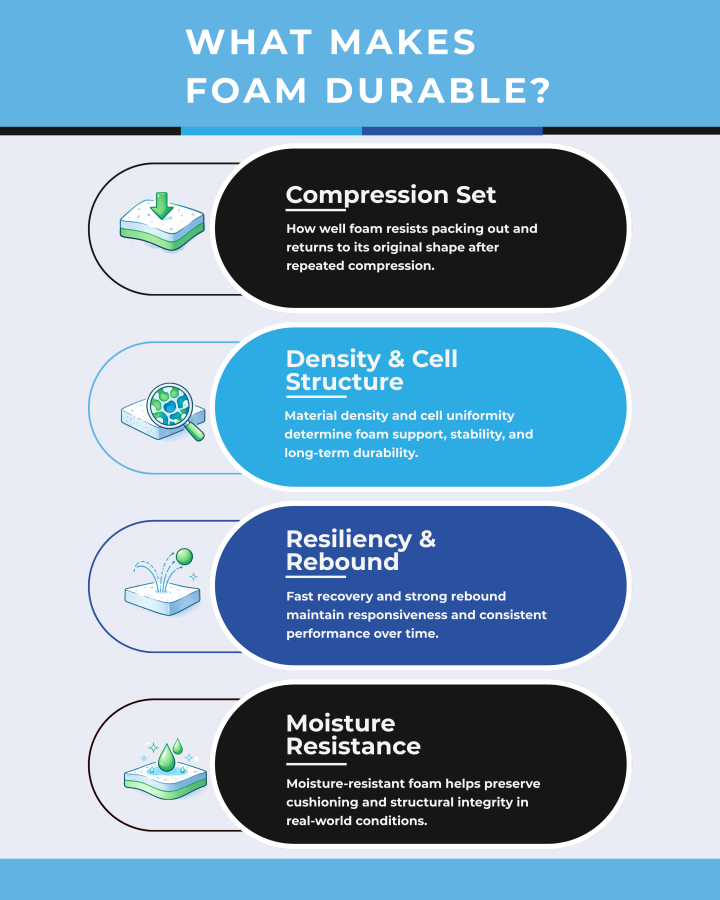
Compression Set
Compression set is one of the most important indicators of foam durability. It refers to the amount of permanent deformation that remains after a material has been compressed and the force is removed, and is evaluated using the ASTM D395 Method B test.
In footwear, every step places pressure on the midsole and insole. Over time, this repeated compression challenges the material’s ability to recover. When foam has poor compression set resistance, it begins to “pack out,” losing thickness and failing to return to its original shape. As this occurs, cushioning diminishes and overall comfort and support decline.
Foams with a good compression set maintain their shape, cushioning, and structural integrity even after extended wear. Closed-cell foams, such as our DURAPONTEX® family, are engineered to help resist permanent deformation, supporting improved durability and more consistent performance over time.
Density and Cell Structure
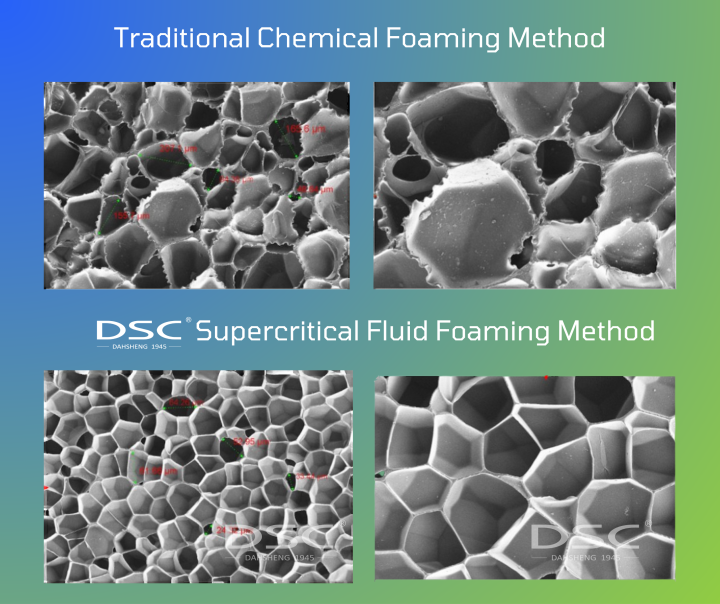
Density and cell structure play a critical role in foam durability. Density refers to the amount of material within a given volume, while cell structure describes how those cells are formed and distributed. Together, these characteristics determine how the foam behaves under load and how well it maintains its structure over time.
{add SCF v regular foam graphic here + caption: Uniform cell structure supports stability, consistency, and long-term durability in high-performance foams.}
Higher density can contribute to greater support and resistance to breakdown, while a more uniform cell structure improves stability and consistency. When properly engineered, this balance helps the foam retain its shape, cushioning, and performance with repeated use, ultimately supporting long-term durability.
Resiliency and Rebound
Resiliency and rebound are key indicators of how well a foam maintains performance over time. A resilient foam recovers quickly after compression, returning to its original shape with minimal energy loss.
Over repeated use, materials with poor resiliency lose responsiveness, resulting in a flatter, less dynamic feel underfoot. As rebound diminishes, so does the shoe’s ability to absorb impact and provide consistent support.
Durable foams are engineered not only to deliver energy return initially, but to retain rebound through repeated compression cycles. In this way, resiliency becomes a measure of how long a material can continue performing as intended.
Moisture Resistance
Moisture resistance is another important factor in foam durability. In footwear applications, materials are regularly exposed to moisture from sweat, rain, and environmental conditions.
Certain foam formulations can degrade, soften, or lose structural integrity when exposed to prolonged moisture. Over time, this can compromise cushioning and support. Selecting foam engineered to resist moisture absorption can help preserve shape, stability, and long-term performance in real-world conditions.
Where Durability Matters Most in a Shoe
Durability requirements vary across different components of a shoe, as each area experiences stress in different ways.
Sockliner / Insole
Compression set resistance and rebound retention are essential for maintaining long-term cushioning and support. These layers must recover consistently under repeated body weight.
Midsole
Impact resistance and resiliency are critical in the midsole, which absorbs the force of each step. It must withstand repeated compression cycles without losing structural integrity.
Heel and Forefoot Zones
These areas experience concentrated, repetitive stress, making material stability and compression resistance especially important.
Outdoor or Work Footwear Applications
Moisture resistance and abrasion durability become additional considerations. Materials must maintain performance in wet, humid, or high-wear environments.
How Durability Impacts Comfort and Performance
Footwear design considers material placement to achieve specific comfort and performance outcomes. However, if durability is not engineered into those materials from the beginning, those benefits diminish over time.
When foam begins to pack out or lose resiliency, cushioning becomes less effective and structural support declines. The result is reduced comfort and compromised performance. A shoe may feel responsive at first, but without durable materials, that experience changes with wear.
For athletes logging high mileage, these changes are not subtle. Cullen McEachern, DSC® Account Associate and Boston Marathon qualifier, sees this firsthand in his training. “When training for a marathon, you spend countless hours and hundreds of miles in your running shoes. As a result, durability becomes a top priority for your footwear and its materials. An essential trait of a good performance shoe is its ability to retain durability over time, allowing you to focus on your training without the distraction, or cost, of frequent replacements.”
Ultimately, long-term comfort and performance are shaped by early material and design decisions. Durable materials help ensure that the intended experience remains consistent throughout the life of the product.
Why Designers and Developers Must Consider Durability Early
From the earliest stages of footwear design, teams must consider how materials will perform within each component of the product. The durability of those materials directly affects how well the original design intent holds up over time.
When durability is addressed early, designers and developers can make more informed decisions around material selection, construction, and performance targets.
At DSC®, we support this process by working closely with designers, developers, and engineers to evaluate material options early in development. With a broad range of foam solutions available, we help identify materials that align with performance requirements while supporting long-term durability.
Durable by Design
Durability is shaped by early decisions in materials and development. The materials selected, and the partners involved, play a critical role in ensuring that a shoe maintains its comfort, structure, and performance over time.
If you are developing your next footwear concept, connect with our team to explore foam solutions that support long-term durability, comfort, and performance.
Frequently Asked Questions About Foam Durability in Footwear:
What makes foam durable in footwear?
Foam durability in footwear depends on how well the material maintains its shape, cushioning, and structural integrity after repeated compression and long-term use. Key indicators of durability include compression set resistance, density, cell structure, resiliency, and moisture resistance.
What is compression set in foam?
Compression set refers to the amount of permanent deformation that remains after a foam material has been compressed and the pressure is removed. In footwear, a good compression set means the foam can recover its original shape after repeated steps, helping maintain cushioning and support over time.
Why is foam density important for durability?
Foam density measures how much material is contained within a given volume. Higher-density foams generally provide greater structural stability and resistance to breakdown under repeated stress. However, durability also depends on factors like cell structure and formulation, not density alone.
How does foam resiliency affect footwear performance?
Resiliency describes how quickly a foam rebounds after compression. Materials with strong resiliency maintain their responsiveness and energy return over time, helping footwear continue to absorb impact and provide consistent support during repeated use.
Why does moisture resistance matter in footwear foam?
Footwear materials are regularly exposed to moisture from sweat, rain, and environmental conditions. Foam that resists moisture absorption is less likely to degrade, soften, or lose structural stability, helping maintain cushioning performance and durability.
Where does foam durability matter most in a shoe?
Durability is especially important in the midsole and insole, where foam experiences repeated compression and impact from each step. These areas must maintain cushioning, rebound, and structural support throughout the life of the shoe.
How can footwear designers improve product durability?
Designers, developers and engineers can improve durability by selecting foam materials engineered to resist compression set, maintain resiliency, and withstand moisture exposure. Evaluating material performance early in the design process helps ensure the shoe maintains its intended comfort and performance over time.
Explore More Posts

Reverie Innovation Summit 2026: What It Means to Evolve
DSC® reflects on the Reverie Innovation Summit 2026 and what it means to evolve with intention, exploring perspectives on AI, technology...

DSC® Unveils MORPH Adaptable Materials Platform and Advanced Foam Construction
Discover how MORPH®, DSC's adaptable materials platform, combines advanced foam technologies with engineered material systems to give footwear...

Why Do Some Shoes Feel Better Than Others?
Why do some shoes feel better than others? The answer lies in material science. Learn how footwear engineers balance cushioning, support, energy...